Welding has become one of the most important processes behind modern manufacturing, construction, infrastructure, transportation, fabrication, and countless products used in everyday life. Although the basic concept of joining metal through heat or pressure may seem straightforward, modern welding has developed into a highly technical discipline that combines metallurgy, engineering, precision measurement, advanced equipment, and skilled workmanship. From structural components and industrial machinery to custom metalwork and specialized fabrication, welding provides the strength needed to create durable assemblies while giving manufacturers and fabricators the flexibility to produce increasingly complex designs.
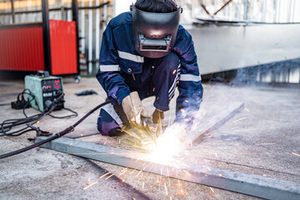
The future of welding is not simply about creating stronger joints. It is about achieving greater precision, improving efficiency, reducing material waste, increasing workplace safety, and producing consistent results across increasingly demanding applications. Advances in automation, digital monitoring, robotics, welding power sources, and material science are changing the way welding projects are planned and completed. At the same time, skilled welders remain essential because technology works best when combined with practical knowledge, careful inspection, and an understanding of how metals behave under different conditions. This combination of human expertise and technological progress is helping Welding Boise Idaho remain a critical part of modern industry.
Why Welding Remains Essential
Welding provides a permanent method of joining metal components, making it particularly valuable when strength and structural integrity are important. Unlike temporary fastening methods, a properly executed weld can create a continuous connection between materials, allowing individual components to function together as a single assembly. This makes welding suitable for applications where structures must withstand weight, vibration, pressure, temperature changes, movement, or repeated mechanical stress.
The versatility of welding is another reason it continues to be widely used. Different welding processes can be selected based on material type, thickness, joint configuration, production requirements, and desired finish. Some methods are suited to heavy structural work, while others provide the control necessary for thin materials or detailed fabrication. This adaptability allows welding to support everything from large-scale industrial projects to highly customized metal components.
Modern welding also plays an important role in repair and maintenance. Damaged equipment, structural components, machinery, gates, frames, supports, and other metal assemblies can sometimes be repaired rather than completely replaced. When appropriate, welding can restore functionality, extend service life, and reduce the need for costly reconstruction.
Precision Has Become a Defining Feature of Modern Welding
Precision is increasingly important as industries demand tighter tolerances and more complex metal assemblies. A weld must do more than connect two pieces of metal. Its location, penetration, dimensions, strength, appearance, and consistency may all influence the performance of the finished product.
Modern welding equipment provides greater control over variables such as electrical current, voltage, heat input, wire feed, shielding gas, and travel speed. Controlling these factors helps reduce inconsistencies and allows welders to adapt the process to specific materials and joint designs.
Precision also begins before the welding arc is created. Accurate measurements, proper material preparation, correct joint alignment, and appropriate fixturing all influence the final result. A small misalignment at the beginning of fabrication can create larger dimensional problems as an assembly progresses. For this reason, professional welding involves careful planning throughout the entire production process rather than focusing exclusively on the welding itself.
Different Welding Processes Serve Different Purposes
There is no single welding process that is ideal for every application. The appropriate method depends on the materials being joined, the working environment, production volume, required strength, and desired appearance. Understanding these differences is essential for achieving reliable results.
Several commonly used welding processes include:
- Gas metal arc welding, which uses a continuously fed electrode and shielding gas and is widely used for fabrication and manufacturing because of its versatility and productivity.
- Gas tungsten arc welding, which provides highly controlled welding and is particularly useful when precision, appearance, and control of heat input are important.
Other processes, including shielded metal arc welding, flux-cored arc welding, resistance welding, and specialized automated techniques, have their own advantages. Experienced professionals select the process based on the actual requirements of the project instead of assuming that one technique will work equally well in every situation.
Welding and the Future of Metal Fabrication
Metal fabrication is evolving as manufacturers seek faster production, better repeatability, and greater design flexibility. Welding sits at the center of many of these developments because fabricated components often depend on welded connections to achieve their final shape and strength.
Computer-aided design has made it possible to develop detailed digital models before fabrication begins. These models can help identify potential interference, calculate dimensions, visualize assemblies, and improve material planning. Welding professionals can use these digital designs as part of a more controlled workflow, reducing the possibility of errors caused by inaccurate measurements or incomplete planning.
Digital technology is also changing how welding processes are monitored. Advanced equipment can collect information about welding parameters and provide feedback that helps technicians maintain consistency. This creates opportunities for better quality control and easier identification of process problems.
The result is a welding industry that increasingly connects traditional craftsmanship with digital manufacturing. The welder of the future may rely on sophisticated equipment and automated systems while still applying fundamental knowledge of materials, joint design, heat control, and inspection.
Automation Is Transforming Welding Productivity
Automation is one of the most significant developments influencing the future of welding. Robotic welding systems can perform repetitive welds with consistent movements and carefully controlled parameters. This can be particularly valuable in high-volume manufacturing environments where the same components must be produced repeatedly.
Automated welding can improve consistency and productivity, but it does not eliminate the need for skilled professionals. Someone still needs to program, set up, monitor, maintain, and inspect automated systems. Welding engineers and technicians must understand how the equipment interacts with the material and joint design.
Automation also has practical limitations. Complex custom fabrication, irregular components, difficult access points, and changing project specifications may require human judgment and manual welding. The future is therefore unlikely to involve a complete replacement of skilled welders. Instead, automation is more likely to work alongside human expertise, taking over repetitive operations while professionals concentrate on planning, problem-solving, inspection, and specialized fabrication.
Material Science Is Expanding Welding Possibilities
The metals used in modern manufacturing are becoming increasingly diverse. High-strength steels, aluminum alloys, stainless materials, heat-resistant alloys, and other engineered materials can provide specific performance characteristics, but they may also present unique welding challenges.
Different materials respond differently to heat. Some can experience distortion, cracking, changes in mechanical properties, or other problems if welding parameters are not properly controlled. This makes metallurgy an important part of modern welding knowledge.
As material science advances, welding techniques must evolve alongside it. New materials can require specialized processes, carefully controlled heat input, specific filler materials, or post-weld treatments. Welders and engineers must understand not only how to produce an attractive weld but also how the welding process affects the material’s long-term performance.
This connection between welding and materials science is likely to become even more important as industries continue looking for materials that are lighter, stronger, more durable, and more efficient.
Welding Supports Sustainable Manufacturing
Sustainability is becoming increasingly important across manufacturing and construction, and welding can contribute to more responsible use of materials. Repairing metal components can extend their service life and prevent functional equipment from being discarded prematurely. Fabricating components accurately can also reduce material waste by minimizing unnecessary cutting, rework, and rejected parts.
Modern welding equipment can contribute to efficiency by providing more precise control over energy and consumable use. Improved processes can reduce spatter, defects, and the amount of material required for corrective work.
Sustainable welding also involves proper planning. Accurate measurements and digital fabrication workflows can help ensure that materials are ordered and cut according to actual requirements. When combined with recycling programs and responsible waste management, these practices can help reduce the environmental impact associated with metal fabrication.
Safety Remains a Fundamental Priority
The technological advancement of welding does not eliminate its inherent hazards. Welding involves high temperatures, intense light, electrical energy, fumes, pressurized gases, and potentially heavy materials. Proper safety procedures are therefore essential regardless of whether the work is performed manually or with automated equipment.
Welders require appropriate protective equipment, including suitable eye and face protection, protective clothing, gloves, and footwear. Ventilation and fume extraction are also important because welding can generate airborne contaminants depending on the materials and processes involved.
A safe welding environment also requires proper equipment inspection, electrical safety, fire prevention, material handling, and workplace organization. Professionals must understand the hazards associated with each specific welding process and take appropriate precautions.
Safety technology is also advancing. Improved ventilation systems, automated monitoring, machine safeguards, protective equipment, and remote operation can help reduce exposure to certain hazards. Even with these developments, safety ultimately depends on responsible procedures and trained personnel.
Quality Control Determines Long-Term Performance
A weld may look acceptable on the surface while containing defects that could affect its performance. This is why quality control is a critical component of professional welding. Depending on the application, welds may be inspected visually or evaluated using more advanced testing methods.
Inspection can identify issues such as cracks, porosity, incomplete fusion, undercutting, excessive penetration, or dimensional inconsistencies. Detecting these problems early helps prevent defective components from progressing further through the manufacturing or construction process.
For critical applications, nondestructive testing techniques may be used to evaluate weld integrity without damaging the finished component. Proper documentation of welding procedures, materials, parameters, and inspections can also contribute to traceability and quality assurance.
Quality is not simply about appearance. A professional weld must meet the performance requirements established for the specific application.
Custom Welding Enables Greater Design Freedom
One of welding’s most valuable qualities is its ability to support custom fabrication. Standard components can be useful for many projects, but custom welding allows designers and fabricators to create structures that fit specific dimensions, functions, and aesthetic requirements.
Custom welding can be used to produce frames, supports, architectural features, equipment components, railings, gates, enclosures, brackets, platforms, and specialized assemblies. The ability to fabricate unique shapes gives architects, engineers, manufacturers, and property owners greater freedom when developing solutions.
This flexibility is particularly valuable when working with unusual spaces or specialized equipment. Instead of forcing a project to conform to a standard component, welding can allow the component to be fabricated around the project’s actual requirements.
The Importance of Skilled Welders in a Technology-Driven Industry
As welding technology becomes more advanced, skilled human judgment remains essential. A welder must understand how materials respond to heat, how joints should be prepared, how welding parameters influence penetration, and how to recognize potential defects.
Experience also matters when unexpected problems occur. Materials may not behave exactly as anticipated, access may be restricted, measurements may need adjustment, or an existing structure may have conditions that were not apparent during initial planning. A skilled professional can evaluate these challenges and determine an appropriate solution.
Technology provides powerful tools, but it does not replace knowledge. The strongest welding operations combine advanced equipment with professionals who understand how to use that equipment effectively.
Looking Toward the Future of Welding
The future of welding will likely be defined by a combination of precision, automation, advanced materials, digital technology, sustainability, and skilled craftsmanship. Robotics and automated systems will continue improving productivity in repetitive applications, while digital monitoring will provide better control over welding parameters and quality. New materials will create additional technical challenges and opportunities, requiring professionals to continuously expand their knowledge.
At the same time, custom fabrication and specialized welding will continue to depend heavily on human expertise. Complex projects often require adaptability, creativity, and practical decision-making that cannot be reduced to a fixed automated sequence.
Welding is therefore not simply an old industrial process being replaced by new technology. It is an evolving discipline that continues to adapt to changing demands. Its fundamental purpose remains the same—to create strong, reliable connections—but the methods used to achieve that purpose are becoming increasingly sophisticated.
Strengthening the Future Through Better Welding
Welding has helped shape modern manufacturing and construction for generations, and its role is likely to become even more significant as industries demand stronger, lighter, more precise, and more efficient products. From structural fabrication to specialized components, welding provides the connection between individual pieces of metal and the finished systems they become.
The future will depend on getting that connection right. Better equipment, automation, digital monitoring, advanced materials, improved safety practices, and rigorous quality control can all contribute to stronger results. Yet the foundation remains skilled workmanship and a thorough understanding of welding principles.
As technology continues to evolve, welding will remain a discipline where precision and strength work together. Its future is not defined solely by machines or by traditional craftsmanship, but by the integration of both. That combination will allow welding to support increasingly ambitious designs, more efficient production, longer-lasting structures, and innovative solutions across industries for years to come.